Can foreigners book China train tickets with a passport?
Yes. China Railway's official English 12306 FAQ explains booking with a valid foreign passport, identity verification and railway e-tickets. Use the passenger details from the travel document you will carry, and check your verification status before relying on a booking.
Start with the exact departure station, arrival station and travel date. Then compare the train duration with the time needed to reach each station. A high-speed station can be outside the city centre, so a short train journey does not necessarily make a short day trip.
China has one of the largest and most convenient train networks in the world. For many travelers, high-speed rail is the easiest way to move between major cities such as Beijing, Shanghai, Xian, Chengdu, Guilin, Hangzhou, Suzhou, Guangzhou, Shenzhen, and Hong Kong.
China’s bullet trains are fast, clean, reliable, and usually easier than flying for medium-distance journeys. They connect major destinations and give travelers a comfortable way to see more of the country. Include station transfers when comparing them with flights.
This guide explains the main train types, seat classes, ticket booking, station procedures, luggage rules, popular routes, and practical tips for first-time visitors.
Why Travel by Train in China?
Train travel is one of the best ways to explore China. High-speed trains are especially useful because they are frequent, punctual, and well connected to major cities.
Main advantages:
High-speed trains are fast and comfortable.
Compare station and airport transfers for your specific route; some high-speed stations are outside the city centre.
Security and boarding are usually simpler than domestic flights.
Trains are less affected by weather delays than flights.
You can see countryside, mountains, villages, and city outskirts along the way.
Train travel is a good choice for families, couples, solo travelers, and private tours.
For routes such as Beijing to Xian, Shanghai to Hangzhou, Shanghai to Suzhou, Guangzhou to Shenzhen, and Chengdu to Chongqing, trains are often the most efficient choice.
Main Types of Trains in China
China has several types of trains. The train number usually tells you what kind of train it is.
G Trains: High-Speed Bullet Trains
G trains are the fastest trains in China. They usually run at speeds of up to 300 km/h or more on major high-speed rail lines.
Best for:
Long-distance high-speed travel.
Beijing to Shanghai.
Beijing to Xian.
Shanghai to Hangzhou.
Guangzhou to Shenzhen.
Chengdu to Chongqing.
G trains are modern, clean, and comfortable. They are usually the best option for international travelers when available.
D Trains: Bullet Trains and Intercity High-Speed Trains
D trains are also high-speed trains, but usually slightly slower than G trains. They are common on intercity routes and some overnight high-speed routes.
Best for:
Medium-distance journeys.
Regional high-speed routes.
Some overnight bullet train services.
C Trains: Intercity Trains
C trains are used for short-distance city-to-city routes. They are common around major urban areas.
Best for:
Beijing to Tianjin.
Guangzhou to Shenzhen.
Shanghai to nearby cities.
Short regional trips.
Z, T and K Trains: Regular Trains
These are slower conventional trains. They may be useful for overnight travel, remote areas, or budget trips, but they are generally less convenient than high-speed trains.
Best for:
Routes without high-speed rail.
Budget overnight travel.
Long scenic journeys.
Remote destinations.
For most first-time visitors, G, D, and C trains are the most practical choices.
China Train Seat Classes
Seat classes vary by train type. On high-speed trains, the main classes are second class, first class, and business class.
Second Class Seat
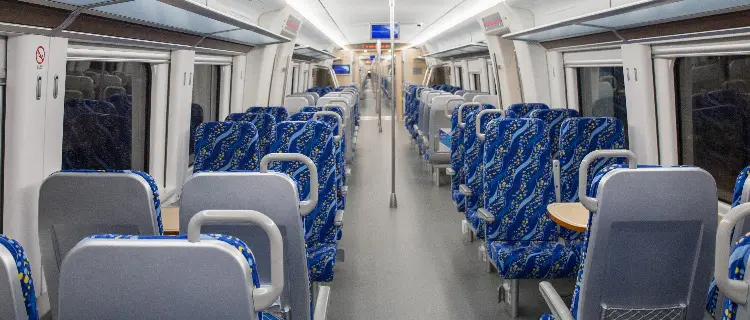
Second class is the most common and budget-friendly option. Seats are arranged in a 3+2 layout. It is comfortable enough for most journeys, especially trips under five hours.
Best for:
Most travelers.
Families and groups.
Budget-conscious trips.
Short and medium journeys.
First Class Seat
First class seats are wider and arranged in a 2+2 layout. There is more space and a quieter atmosphere.
Best for:
Travelers who want extra comfort.
Longer high-speed journeys.
Business travelers.
Travelers with more luggage.
Business Class Seat
Business class is the most comfortable option on many G trains. Seats are spacious, often with a reclining or lie-flat design.
Best for:
Luxury travelers.
Long-distance routes.
Travelers who want maximum comfort.
Special occasions.
Sleeper Classes on Regular Trains
On overnight regular trains, common options include hard sleeper and soft sleeper. Soft sleeper is more comfortable and usually preferred by foreign travelers if taking a traditional overnight train.
How to Book China Train Tickets
Train tickets in China can sell out quickly, especially during holidays and peak travel seasons. It is best to book in advance.
You usually need:
Passenger name exactly as shown on passport.
Passport number.
Travel date.
Departure and arrival cities.
Preferred train and seat class.
Common booking methods:
Official railway platforms.
Travel agencies.
Hotel concierge services.
Private tour operators.
Ticket counters at railway stations.
For international travelers, booking through a travel service is often easier because the system requires passport details and Chinese station names can be confusing.
When Should You Book?
Tickets are usually released in advance, and popular routes can sell out fast.
Book early if traveling during:
Chinese New Year.
Labor Day holiday in early May.
National Day holiday in early October.
Summer vacation.
Weekends on popular routes.
If your itinerary includes important train segments, secure tickets before finalizing hotels and daily plans.
How to Read China Train Station Names
Large Chinese cities often have several railway stations. This is very important.
Examples:
Beijing Railway Station
Beijing West Railway Station
Beijing South Railway Station
Shanghai Railway Station
Shanghai Hongqiao Railway Station
Xian North Railway Station
Chengdu East Railway Station
Guangzhou South Railway Station
High-speed trains usually depart from newer stations such as Beijing South, Shanghai Hongqiao, Xian North, Chengdu East, or Guangzhou South.
Always check the exact station name. Going to the wrong station can cause you to miss your train.
What to Expect at a China Railway Station
Chinese railway stations are large and busy, but the process is manageable if you allow enough time.
Typical process:
Arrive at the station.
Show passport for identity check.
Pass security screening.
Find your waiting hall or gate.
Wait for boarding announcement.
Scan or check ticket/passport.
Go to the platform.
Board the train.
Find your carriage and seat.
For major stations, arrive at least 60 to 90 minutes before departure. During holidays or at very large stations, allow more time.
Do You Need a Paper Ticket?
China has moved toward electronic tickets. Foreign travelers usually use their passport as the identity document linked to the booking.
However, procedures can vary by station and booking method. Keep your booking confirmation available on your phone and carry your passport at all times.
Luggage Rules on China Trains
High-speed trains have overhead racks and luggage spaces near carriage ends. Most travelers can bring suitcases, backpacks, and carry-on bags without problems.
Practical luggage tips:
Pack lighter if possible.
Large suitcases should go near the carriage ends.
Keep valuables with you.
Do not block aisles or doors.
Arrive early if you have large luggage.
Unlike flights, there is usually no strict airline-style luggage check-in for high-speed trains, but oversized luggage can be inconvenient.
Food and Drinks on Trains
High-speed trains usually have hot water dispensers, snack carts, and sometimes a dining car. Food options may be simple, so many travelers bring snacks or a light meal.
You can bring:
Bottled water.
Fruit.
Bread or sandwiches.
Snacks.
Instant noodles or tea.
Hot water is commonly available, which is useful for tea, instant noodles, and baby formula.
Popular High-Speed Train Routes in China
Beijing to Shanghai
One of China’s busiest and most important high-speed rail routes. The fastest trains take around 4.5 to 6 hours.
Best for:
Business travel.
Classic China itineraries.
Travelers who prefer trains over flights.
Beijing to Xian
A popular route for travelers visiting the Great Wall, Forbidden City, and Terracotta Warriors. High-speed trains usually take around 4.5 to 6 hours.
Best for:
First-time China tours.
Golden Triangle itineraries.
Families and culture travelers.
Shanghai to Hangzhou
A short and easy high-speed trip, often taking about one hour or less.
Best for:
Day trips.
Garden and lake scenery.
Combining Shanghai with Hangzhou.
Shanghai to Suzhou
A very short train ride, often around 30 minutes.
Best for:
Classical gardens.
Water towns.
Easy day trips from Shanghai.
Chengdu to Chongqing
A convenient high-speed route in southwest China, often taking around 1 to 2 hours.
Best for:
Panda tours.
Yangtze River cruise connections.
Sichuan and Chongqing itineraries.
Guangzhou to Shenzhen and Hong Kong
High-speed and intercity routes make the Greater Bay Area easy to explore.
Best for:
South China travel.
Business trips.
Hong Kong connections.
Train or Flight: Which Is Better in China?
For many routes under 5 or 6 hours by high-speed rail, trains are often better than flights. Stations are usually easier to reach, boarding is simpler, and delays may be less frustrating.
Choose trains for:
Beijing to Xian.
Shanghai to Hangzhou.
Shanghai to Suzhou.
Chengdu to Chongqing.
Guangzhou to Shenzhen.
Short and medium routes.
Choose flights for:
Very long distances.
Routes without convenient high-speed rail.
Trips to far western China, Tibet, or remote regions.
When flight times fit the itinerary better.
China Train Travel Tips for First-Time Visitors
Use the exact passport name when booking.
Double-check the departure station.
Arrive early at large stations.
Keep your passport accessible.
Bring snacks and water.
Pack luggage you can carry yourself.
Keep your ticket confirmation on your phone.
Listen for your train number, not only the destination.
Be ready to board when the gate opens.
Do not wait until the last minute.
Train Travel During Chinese Holidays
Chinese holidays can be extremely busy. Train tickets may sell out quickly, and stations can be crowded.
The busiest periods include:
Chinese New Year.
Labor Day holiday.
National Day holiday.
Summer travel season.
Major local festivals.
If possible, avoid peak holiday travel. If your trip must fall during these dates, book early and allow extra time.
Best China Itineraries Using High-Speed Rail
China’s high-speed rail works very well for classic multi-city routes.
Popular train-friendly itineraries:
Beijing, Xian and Shanghai.
Shanghai, Suzhou and Hangzhou.
Chengdu and Chongqing.
Guangzhou, Shenzhen and Hong Kong.
Beijing, Xian, Chengdu and Shanghai.
High-speed rail can make a private China tour smoother because it reduces airport transfers and gives more flexibility between cities.
Conclusion
China’s train system is one of the most efficient ways to explore the country. High-speed rail is fast, comfortable, and especially useful for connecting major travel destinations.
For first-time visitors, routes such as Beijing to Xian, Shanghai to Hangzhou, Shanghai to Suzhou, and Chengdu to Chongqing are excellent examples of how convenient train travel can be. With the right station, passport details, and advance booking, China trains can make your trip easier, smoother, and more memorable.
A practical checklist before you confirm a rail itinerary
- Check the full station names, including North, South, East or Hongqiao, on both the ticket and your transfer plan.
- Check the current timetable and ticket availability with China Railway 12306; journey times in this guide are approximate.
- Keep the passport linked to the ticket accessible. Follow station staff instructions if an automatic gate cannot read it.
- Check current baggage limits and prohibited items in the official railway FAQ. Space on board does not remove baggage restrictions.
- Allow time for station transfers and hotel check-in before adding sightseeing on arrival day.
Build the sightseeing around your transport: explore Beijing, Xian and Shanghai, or compare our 8-day classic China itinerary. Confirm each transport segment in your quote rather than assuming every journey uses a train.